Posts

Showing posts with the label Drug Administration

Otic Drug Delivery

Image
Introduction Ear preparations are usually placed in the ear canal by drops in small amounts for Removal of excessive cerumen (earwax) Treatment of ear infections, inflammation or preparation. Advantages Ability to achieve a local drug concentration much higher than what could be achieved via systemic administration. Also minimizing off-target systemic exposure. Proper Administration Wash your hands thoroughly with soap and water. If the ear drops are a cloudy suspension, shake the bottle well for 10 seconds. For convenience, it is probably easier to have someone other than the patient to administer the drops. When instilled into the ear, to allow the drops to run in deeper, the earlobe should be held up and back. For a child younger than 3 years of age, the earlobe should be held gently down and back to open the ear canal. Also, remain in position for several minutes and gently press on the small skin flap over the ear to help the drops to run into the ear canal. When eardrops are pre...

Rectal Route

Image
Introduction Drugs can be given rectally in solution, suppository or emulsion form. Indications This route of drug administration is Generally for local effect rather than systemic effects. Such as constipation , anal fissures and haemorrhoids . Indicated for drugs inactivated by the gastrointestinal fluids or liver when given orally [ bypassing first-past (presystemic) metabolism ] Indicated when the oral route is precluded , for example when a patient is vomiting or unconscious (i.e. when the patient is unable to swallow). Disadvantages The rectal route is inconvenient . Can affect patient compliance especially for chronic ailments because of privacy and cultural aspects. Drug absorption is often irregular and difficult to predict. It depends on the positioning of the dosage form in the rectal cavity and on interpatient variations in rectal content. How to Use

Vaginal Route

Image
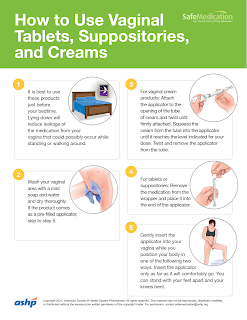
Introduction A range of vaginal dosage forms are currently available and used in practice. These include Vaginal pessaries (suppositories, tablets and capsules) Liquids (vaginal solutions, emulsions and suspensions) Semi-solids (creams and gels) Vaginal films Vaginal rings Tablets for vaginal solutions and suspensions Gaseous preparations (sprays and foams) Medicated vaginal tampons Indications This route of drug administration is Intended for a range of local effects . Treatment of vaginal infections (e.g. bacterial, viral and fungal ). Local delivery of hormones for labour induction. Contraception via the delivery of spermicides. Bypassing first-past (presystemic) metabolism Commercial vaginal progesterone as part of the assisted reproductive technology treatment program for infertile women Oestradiol for the development of uterine lining to combat vaginal atrophy in postmenopausal women (hormone replacement therapy) Disadvantages The vaginal route is sex-specific in nature. Can af...

Drug Administration

Image
Introduction The absorption pattern of drugs differs considerably between individual drug substances, as well as between the different administration routes. A medication administration route is often classified by the location at which the drug is administered, such as oral or intravenous. The choices of routes in which the medication is given depends not only on the convenience and compliance, but also on the drug's pharmacokinetics and pharmacodynamic. The right route of administration and dosage form is selected to maximise outcome of treatment. To illustrate, 32 years old epileptic male with fever and infection on nasogastric feeds , prescribed with phenytoin 300 mg daily. Which dose form do you choose (capsules, suspensions or injections) and why? 48 years old patient with osteomyelitis, microbiological culture positive for the bacteria Methicillin Resistant Staphylococcus Aureus (MRSA). Which dose form do you choose (IV or oral) and why? 4 years old boy diagnosed with bron...