Posts

Showing posts with the label Valproate

Bipolar Disorder

Image
Introduction Bipolar disorder is characterized by recurrent episodes of elevated or irritable mood and depression , accompanied by changes in sleep and energy and associated with cognitive, physical and behavioural symptoms. Bipolar I disorder is characterized by at least 1 episode of mania , and usually episodes of depression and/or hypomania. Bipolar II disorder is characterized by a history of major depressive episodes and hypomanic episodes only, without episodes of mania. Bipolar disorder has a strong genetic basis and a peak onset in young people . Management Consider mood stabilizers (e.g. lithium or valproate) and second-generation antipsychotics (e.g. quetiapine, lurasidone, aripiprazole, olanzapine, risperidone) for the primary treatment of bipolar disorder. For maintenance treatment of bipolar disorder, aim for the highest tolerable lithium plasma level in the range of 0.6-0.8 mmol/L. Reduce to 0.4-0.6 mmol/L in case of good response but poor tolerance, or Increase to 0.8...
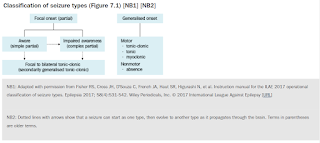
Epilepsy

Image
Introduction Epilepsy is a disorder characterised by a tendency to experience recurrent seizures . The International League Against Epilepsy's definition is 'a disease of the brain defined by: at least 2 unprovoked (or reflex) seizures occurring more than 24 hours apart 1 unprovoked (or reflex) seizure and a probability of further seizures similar to the general recurrence risk (at least 60%) after 2 unprovoked seizures, occurring over the next 10 years diagnosis of an epilepsy syndrome.' All seizures can be described based on the patient's symptoms. Motor symptoms include sustained rhythmical jerking movements (clonic), limp or weak muscles (atonic), muscle twitching (myoclonus) and rigid or tense muscles tonic). Non-motor symptoms include changes in sensation, emotions, thinking or cognition. Absence seizures typically present as staring spells. NOTE: Seizure type has important implications in the choice of antiseizure medications. Epilepsy can be the primary probl...