Teaching
Introduction
The third World Health Organization Consultative Group on the Role of the Pharmacist held in 1997 proposed the concept of "Seven-Star Pharmacist".
- Three additional roles (researcher, entreprenuer, agent of positive change) were introduced later, leading to the "Ten-star pharmacist" model.

One of a pharmacist's key responsibilities is to assist with the education and training of the public and future generations of pharmacists.
- My English teacher's words still ring true: "The more you use what I teach, the more it becomes your own." This sentiment deeply resonates with my passion for knowledge sharing.
- I intend neither to show off my expertise nor to scold you for my own amusement.
- I simply hope to provide you with the guidance that I missed out on when I was a junior.
Experience Sharing
Our teaching methods are mostly modeled on past experience (i.e. how we were trained as provisional registered pharmacists) and how we believe things should be done.
- Hence, I often tell junior fully registered pharmacists, "Starting now, you have the opportunity to guide fresh PRPs differently from how you experienced it yourself.".

Based on my personal experience, teaching should not focus solely on covering a detailed syllabus; it must also consider a PRP's personal goals for their rotation.
- When I was new to the profession, I was ambitious. I aimed to pass down all my knowledge and experience, expecting trainees to be in an active learning mode.
- Very soon, I realized this was an impossible mission. Some individuals may neglect the knowledge you have accumulated over the years, rather than appreciating that you are passing down wisdom.
- You can push yourself to put extra effort into self-learning, but it is practically impossible to force anyone else to learn. Many just want to finish their work on time and never consider the importance of continuous professional education.
- This realization made me question my approach. I wondered if I was being too strict or expecting too much. Perhaps I should just focus on the tasks at hand to avoid the frustration of disappointment.
- Nonetheless, this realization partly pushed me to create the Rx Note blog, allowing fresh pharmacists who are genuinely eager to learn to do so at their own pace.
Today, my educational philosophy no longer centers on simply pouring out information.
- Instead, I view it as a combination of knowledge assessment and the sharing of key insights gained through practical experience.
- Realizing that information overload is common, I now focus on reassessing a PRP's ability to recall and relate information throughout their learning journey.
- Ultimately, much like medication counseling, I believe it is best to conclude every lesson with three key "take-home" messages.
As we become more senior, we often develop more patience when guiding juniors, perhaps because we have seen the severe consequences of things going wrong.
- More importantly, we reach the same conclusion: it is your own responsibility to ensure you learn from your daily work.
- Even if you have taught a topic in great detail - including all the dos and don'ts - a new pharmacist may nod in understanding yet continue to perform substandard practices.
- While it is tempting to stop caring about those who are lazy and unmotivated, it is far more productive to invest our efforts in guiding those with potential and the right attitude.
- Ultimately, a PRP's learning journey rests heavily on their own initiative.
To the Fresh Graduates: Cycles of Training
Provisionally registered pharmacists may not immediately recognize their experience as part of a larger training cycle.
- However, for each batch of fresh pharmacy graduates, preceptors slowly guide them from scratch, aiming for them to be proficient by the end of the year.
- Supervisors often find it frustrating to train PRPs from novices to competent professionals, only to have them leave as the cycle begins anew with the next batch.
- Often, the same mistakes are repeated by different people across various cohorts. To a certain extent, this builds frustration and diminishes enthusiasm.
As you progress in your career and become a senior pharmacist yourself, you will gain a deeper understanding of why seniors set expectations and make demands of new graduates.
Consider the following reflections:
- Looking back on our own PRP journeys, were we really the best students our senior pharmacists expected?
- Did we make numerous silly mistakes or lack adequate knowledge during our first year?
- Are newer generations increasingly lacking self-initiative, opting instead for easy shortcuts and immediate gratification?
Everyone learns at their own pace and picks up skills and confidence along the way.
- However, "learning at my own pace" becomes an excuse if you are not actively pursuing self-improvement.
- You should not resent seniors for knowing more due to their working experience; remember that they also put in extra effort to learn.
Finally, it is always wiser to seek clarification by asking questions when you have doubts, rather than persevering with your own assumptions.
- Even when senior pharmacists try to guide you step-by-step, they will struggle to assess your understanding if you simply nod "yes" throughout the process, only to make mistakes later.
- At the end of your rotation, offer a few thankful remarks to encourage them to continue their excellent, yet often unnoticed, hard work.
To the Preceptors: Mutualism
As human beings, mutual respect is vital.
- We should not harbour thoughts of superiority or consider ourselves better than others.
- The days of us being the "fresh ones" have passed, and today's juniors will soon grow older and become your colleagues.
Crucially, we should not judge a person's capabilities based on rumors or treat them unfairly.
- For example, we should not immediately assume that juniors are failing to give their best effort or that their performance is intentionally subpar.
- They face significant stress in completing their tasks and have other life commitments.
- While there may be some truth in others' comments, it is best to take them with a grain of salt.
Let us not forget the ultimate goal of mutualism.
- Senior pharmacists can share their practical experiences, while junior pharmacists can provide updates on current medical knowledge.
- It is always valuable to explore an issue from a different perspective.

The Exhaustive Task
Despite the ideal of mutualism, the daily reality often feels much heavier.
While trying to figure out how to be a good preceptor, I often wish I could abandon the obligation entirely because it is exhausting, frequently unrewarding, and sometimes demotivating.
- Not many PRPs enjoy being bombarded with medical questions daily.
- In traditional education, we are often trained through rote memorization and direct instruction, rather than actively developing our reasoning skills.
- A pharmacy university does not give you all the knowledge you will need for your career; rather, it attempts to polish your ability to find the answers.
Unfortunately, preceptors rarely receive dedicated recognition for their efforts.
- Many interns gravitate toward "friendly" seniors who demand very little, dismissing dedicated, stricter preceptors as being too harsh.
- Furthermore, preceptors are not paid a cent extra for the grueling task of ensuring their trainees are actually competent.
- In extreme cases, rather than receiving a thank-you letter, I have once received a complaint from a pharmacy student who told the university I yelled at she - which I never did. An almost laughable complaint is, "Why do you ask questions we never learned in university?" When questioned, management sometimes suggests that the next generation is more fragile, unable to handle harsh feedback, and that we need to adapt our teaching styles.
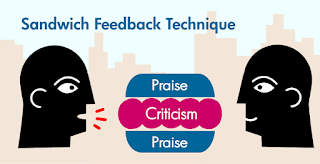
- In this context, practicing the sandwich feedback technique can be counterproductive if the trainee ultimately fails to see their mistake.
- If we tolerate substandard practices with a pampered approach, future generations will never realize their faults, and one day, they may be the ones providing "health education" to your own family members.
- Healthcare is a critical profession where errors must be minimized.
There are also times I feel that free education is taken for granted.
- Sometimes I think we should charge willing pharmacists a fee for our professional advice.
- When resources are free, people often fail to appreciate the extra time and effort sacrificed to provide them.
- Perhaps if knowledge were labeled with a price, it would filter out those who have no real intention of learning.
- Nevertheless, my professional sentiment pushes me to continue sharing knowledge for free, even though I fear that this fire may one day be extinguished by a generation of pharmacists who simply do not wish to learn.
Summary
To teach is to have passion and dedication for others, a selfless giving of your time and commitment.
- Believe me, undertaking the role of an educator is not an easy task.
- Some pharmacists possess vast knowledge and expertise in certain clinical areas, but they have forgotten the challenges they faced as PRPs. This disconnect can make it difficult for them to communicate effectively with trainees at an appropriate level.
- Consequently, many highly professional clinical pharmacists give up teaching due to the disappointments and complaints they receive along the way.
But, remember this analogy: Every fresh pharmacy graduate is like a blank cake.
- Preceptors cannot transform them into biscuits, as they are inherently cakes.
- What we do during PRP training is help decorate them, enabling them to better cope with future challenges.
NOTE: It is sometimes funny to think that while we may learn a topic in minute detail (step-by-step, down to the molecular level), we must then summarize that information into a broad overview when explaining it in layman's terms to a patient.
Comments
Post a Comment