Preface
Introduction
I am neither a purely dedicated hospital pharmacist, nor a perfect salesperson at a community pharmacy.
- I believe that money does not grow on trees, and that customers should always be given complete information regarding the potential benefits and risks of any recommended product.
- Hence, a huge portion of this blog does not focus on promoting sales, but rather preaches on evidence-based practice.
- This is likely because I come from a humble background and genuinely want people to spend their money wisely.

Theory vs Reality
I have tried to keep the notes presented here short, simple and sweet.
- However, this simplification sometimes backfire, as I tend to omit key information that is highly relevant in real clinical practice.
- In reality, managing patients is always much more complex than treating a disease on paper.
- Patients come to us with real-life struggles and pain that require empathy and understanding.
Consider these real-world scenarios:
- The part-time chef: A patient might tell you he has a hand injury, leading you to dispense NSAIDs and advise him to rest his hands for a few days. However, as a part-time chef, he cannot do this because he relies on his daily wage to feed his family.
- The grieving mother: Imagine a cancer patient crying right in front of you, asking if her current treatment is the best available option. She trusts that healthcare professionals know what is the best for her. She reveals that her husband passed away last month, her son is still very young, and she has not yet disclosed her condition to him. Right now, she feels she simply cannot die.
- The devoted pensioner: Consider a pensioner who walks into your community pharmacy and tells you his wife is currently bedridden. Just before he left the house, he asked her, "Is there anything I can buy for you?" His wife lovingly replied, "Just buy something that you would like to eat for yourself today."
In short, patient care is often much more than just treating a disease; it is also about understanding a patient's unique life story.
- While a one-size-fits-all approach is often ineffective, foundational clinical knowledge should always guide the advice you give.

Experiences
There are many things that I would like to share with you, but some messages cannot be conveyed accurately and easily through words alone.
- How you approach an issue can vary significantly depending on the scenario and the individual. You can joke around with some patients, while with others, a strict and professional demeanor is necessary.
- There are also critical soft skills that we cannot learn through reading, but only through working experiences, such as communication, critical thinking, problem solving, decision making, leadership and innovation.
- Furthermore, there are quick "do's and don'ts" that senior pharmacists can immediately point out after observing your real-life practice, guiding you in a better direction.
- Remember, theories are simply knowledge stored in our brains; they are not necessarily integrated into our daily actions.
Nonetheless, with each passing days as working pharmacists, we indirectly level up by encountering different case scenarios.
- We are actively learning and applying our knowledge.
- We become more confident in handling customer and patient issues, instead of feeling helpless.
- Certainly, the mistakes we have made - or heard about from others - make us more cautious moving forward.
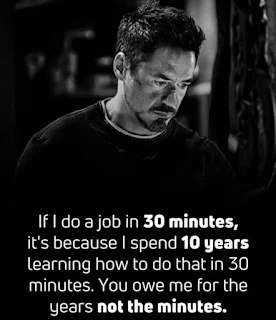
In a nutshell, working experience is an immeasurable treasure that is all too often undervalued.
Summary
I am glad that I was once young and had the dream of creating a resource for pharmacists in Malaysia.
- I dedicated countless hours of my free time, including my off days and break times, to planning, writing and developing blog posts and materials that I believed would be useful to my peers.
- Moreover, I underestimated the amount of consistent efforts required to keep the information up-to-date, as the medical field is constantly evolving.
Despite this, I have learned a great deal throughout this self-directed journey.
- The act of writing itself has helped me analyze information and deepen my own clinical knowledge.
- Most importantly, I realise that I enjoy expressing my heart through personal thoughts far more than simply presenting cold, hard medical facts.
You already did your best, I am so proud of you!
ReplyDelete